
Alphawave Technologies
Smart Footwear Venture
Role: Product Owner & Founder
Timeline: 2020–2023
Type: Hardware + Mobile SaaS | Wearable Tech | IoT
Scope: Concept → Market Discovery → MVP → Technical Pre-Validation
Product Vision
To design the first app-controlled adaptive footwear, enabling users to dynamically change colors and patterns using their phone — blending personalization, fashion, and smart wearable technology.
“Shoes that adapt like your phone wallpaper — customizable, expressive, and digitally intelligent.”
Phase 1 — Product Discovery & Vision Architecture
Defining Mission, Target Market & Use Case
Conducted market gap analysis across fashion tech, smart wearables, and customization products.
Identified growing trend in: Self-expression, modular fashion, sustainable personalization, and youth-driven digital identity.
PM Deliverables built:
- Product Vision Statement
- Problem Statement
- User Personas (Sneakerheads, lifestyle users, creators)
- Market Size Model (~$12B Growing Smart Wearables Market)
- Business Model Canvas (Customizable hardware + digital experiences)
Phase 2 — Requirements Definition & Technical Feasibility
Key Challenge: Can this technology (e-Ink / OLED / color-shifting materials) actually be embedded into a shoe while maintaining flexibility, durability, and battery efficiency?
Activities Performed
| Exploration | What We Did |
|---|---|
| Material Feasibility | Evaluated OLED, LCD mesh, flexible e-Ink, electrochromic film |
| Vendor Discussions | Met with E-Ink Corp and multiple Shenzhen prototyping labs |
| Legal & Patent Research | Conducted IP feasibility, initiated provisional patent development |
| Technical Workshops | Evaluated battery integration, wireless controllers (BLE), flex-PCB constraints |
| Engineering Budgeting | Cost modeling for prototype versioning, BOM analysis |
PM Deliverable Created: Technical Feasibility Assessment & Build vs Buy Matrix
Decision: Pivoted away from OLED screens (fragility / heat / high-cost) → toward static color-shifting e-Ink panels with Bluetooth microcontroller integration.
Phase 3 — Design & Experience Prototyping
Prototype 1 — Concept Modeling (Sketches & 2D Visual Renders)
Goal: Capture form, functionality, and the user experience.
Created concept storyboards, sketch design pack, and usage journey mapping.
Defined mobile app companion concept: Color selection, presets, connectivity, “Style Library.”
Prototype 2 — Low-Fidelity UX Wireframes
Built quick flows using Figma lo-fi, focusing on:
- How users select styles
- How shoe connects to app (Bluetooth scanning)
- Style presets & favorites experience
Deliverables:
- User Flow Maps
- Lo-Fi Wireframes
- Interaction Model Diagram (shoe ↔ phone ↔ cloud preset sync)
Phase 4 — High-Fidelity Design & Physical Prototype Coordination
Hardware: Physical Product Engineering & Manufacturing Enablement
E-ink Prism Model
OLED Model
- Developed detailed 3D renders and engineering-ready shoe models using Blender and Keyshot, integrating battery housing, MCU compartment, wiring channels, and removable color panel slots.
- Built multiple iterations of physical prototypes using Arduino and then ESP32, allowing BLE communication, higher power efficiency, and debugging through the Arduino IDE and VS Code.
- Managed BOM (Bill of Materials) planning and sourcing, coordinating key components: fabric base, e-textile layer, 3.7V LiPo battery, ESP32-based microcontroller, wiring harness, and color-change e-ink panel prototypes.
- Created technical documentation and annotated CAD files to communicate design intent, constraints, and dimensions to Shenzhen-based manufacturing partners for prototyping.
- Engaged with E-ink suppliers and wearable material specialists, evaluating tradeoffs in flexibility, voltage tolerance, durability, and response time for color change modules.
- Coordinated design handoff, prototype approval, and version tracking using supplier communication packets, combining renders, specs, materials, and firmware interactions.
- Incorporated user feedback loops to refine wearability, weight distribution, charging methods, and style preservation—improving user comfort perception and aesthetic appeal.
Embedded Software & Hardware Control
- Iterated from Arduino-based prototypes to ESP32 microcontroller for improved Bluetooth capabilities, battery efficiency, and processing speed.
- Wrote firmware in C/C++ to handle BLE communication, boot sequencing, power management, and LED driver control.
- Designed logic for real-time color switching, synchronization timing, and memory-based preset storage on EEPROM.
- Collaborated with an electrical engineer to build a custom PCB, integrating power regulation, BLE module, LED drivers, and charging components.
- Tested firmware at multiple stages, using serial debugging and edge-case simulations to improve reliability and responsiveness.
Mobile Software – React Native App (User Experience & BLE Integration)
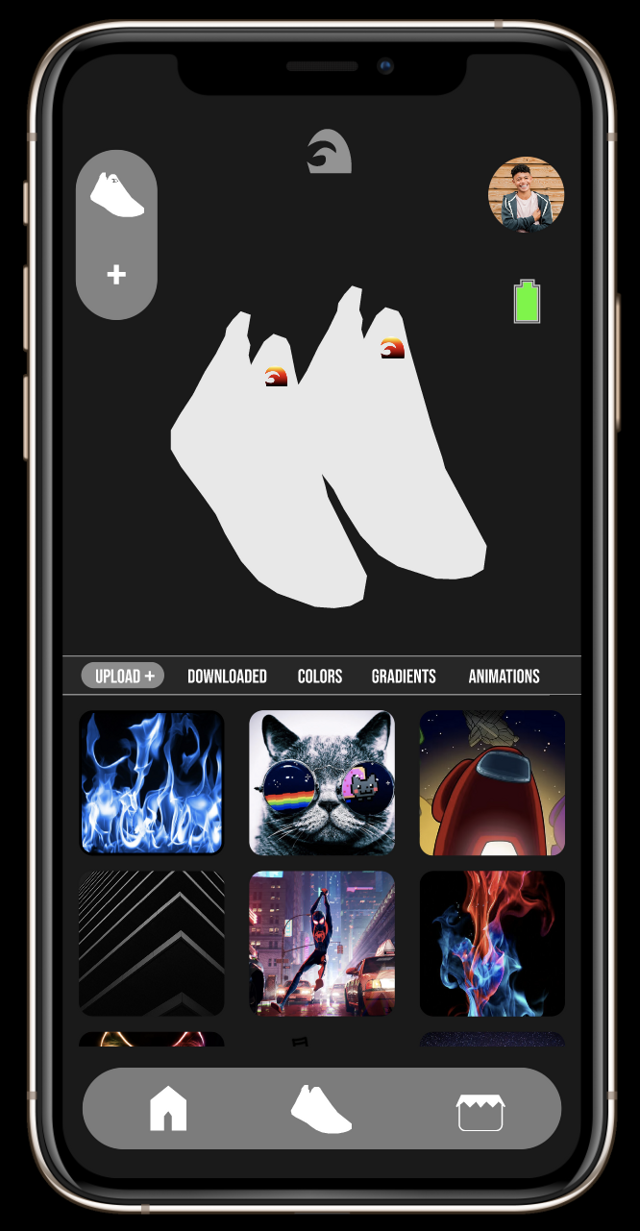
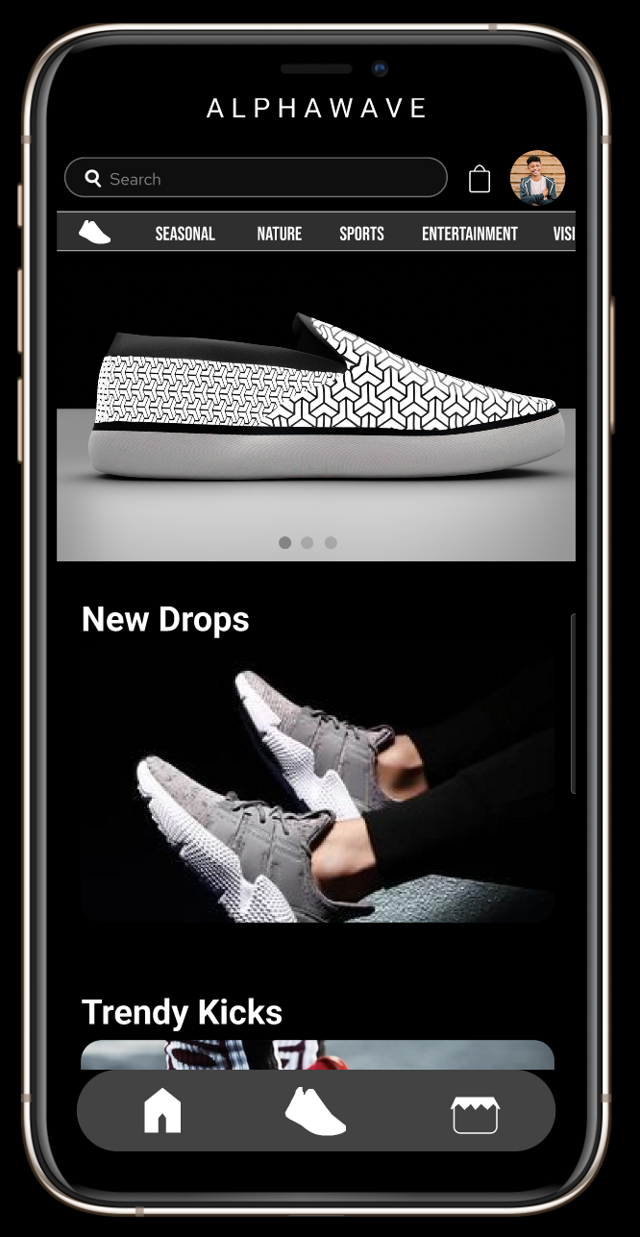
- Built a hybrid mobile application using React Native to support both iOS and Android, prioritizing faster iteration and cost efficiency for prototype testing.
- Designed and documented the BLE command protocol, mapping app interactions to firmware-level actions (hex command strings for color updates, style changes, and preset sync).
- Created high-fidelity Figma screens, then converted them into responsive React Native components—Live Preview, Color Wheel, Preset Editor, and One-Tap Apply Style.
- Structured the app using a modular architecture (UI Layer → BLE Service Layer → Firmware Controller), ensuring scalable integration with hardware.
- Implemented real-time preview simulation in the app using React Native Animated API to mirror actual hardware behavior — helping users visualize style changes before pushing them to the shoe.
- Conducted usability testing across 15+ users, identifying friction in Bluetooth pairing flow; iterated to add automatic device detection and onboarding prompts.
Deliverables:
- Hi-Fi App Design System
- Design Spec Document for Hardware Integration
- Clickable Prototype for Demo & Pre-Investor Pitch
Phase 5 — User Testing & Market Validation
Conducted 100+ tests with: Lifestyle users, Fashion students, and TikTok content creators.
| Feedback | Value | Outcome |
|---|---|---|
| Customization felt scarce in the footwear market | High | Confirmed interest |
| Users preferred preset-based designs, not complex manual editing | High | Simplified UX model |
| Concerns about durability and weather-resistance | High | Redesigned housing |
| Suggested adding preset “Collections” (Seasonal, Minimal, Streetwear) | Medium | Added Collection concept |
PM Deliverable: Usability Report — Iteration Path for V2
Phase 6 — MVP Concept Definition (Go-to-Market Prep)
Based on feasibility, user desirability, and cost modeling, MVP was defined as:
App-Controlled Static Color-Shifting Shoe (No animation video, just dynamic color panels)
- Mobile App Integration
- Limited battery use (<8hrs per charge)
- Quick style swapping
- Limited initial presets (6–10 styles)
- Fabricated to withstand physical usage
Deliverables:
- MVP Feature List & Prioritization (MoSCoW)
- Go-to-Market MVP Plan
- Pitch Assets for Investor Readiness
Outcome & Learnings
Why MVP Production Paused:
- Supply chain & manufacturing risk too high for bootstrapped budget
- Complexity in durability testing & certifications
- High initial manufacturing cost ($85–$120 per pair — too high without volume)
What I learned:
- Hardware x Software PM requires deep technical feasibility + vendor collaboration
- Human behavior favors simplicity—users don't need full control, just curated choices
- PM Rule: Faster doesn't mean better — “Test desirability before building feasibility.”
Next Iteration (Concept for Future)
Knowing GenAI and flexible tech are evolving rapidly, revived concept can become:
AI-Powered Adaptive Footwear — Upload an outfit → App generates matching shoe style → Sends to smart footwear with instant color sync.